
TMS Treatment Near Me at Ardent — A Drug-Free Depression Treatment That Works When Medication Doesn't
Transcranial Magnetic Stimulation (TMS) is an FDA-cleared treatment for conditions such as depression, anxious depression and Obsessive Compulsive Disorder (OCD). At Ardent, our NeuroStar TMS program delivers FDA-cleared, non-drug treatment for depression – with an 83% response rate and 62% remission rate in clinical trials. If antidepressants haven’t worked for you, TMS treatment near me may be the breakthrough you’ve been waiting for.
What is TMS?
Over 8.5 million Treatments Performed in Over 230,000 Patients
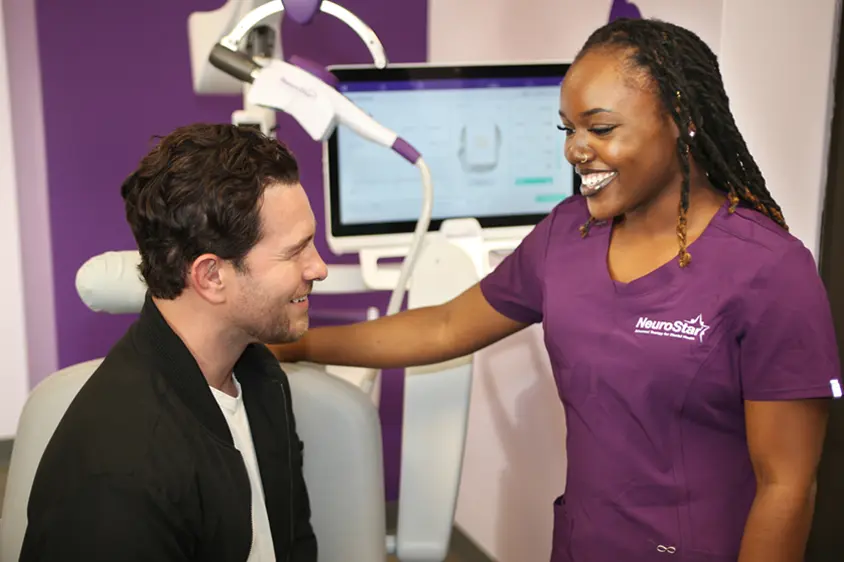
A Safe, Effective Depression Treatment
The NeuroStar TMS treatment doesn’t produce side effects like medication does.1,9
Most insurance providers now offer coverage for NeuroStar TMS treatment.
NeuroStar is a non-invasive treatment available at our Oak Brook, IL that reawakens the connections in your brain.
How Long Does the TMS Therapy Take and What Does It Feel Like?
As mentioned above, this is a repetitive treatment. You can’t just get a large dose of it and be finished. You have to have it five times a week over a period of 4 to 6 weeks to see the real effects.
Each session takes 20 to 30 minutes to complete and must be done at our TMS treatment near me clinic in Oak Brook, IL
You may feel a tapping sensation on your scalp as the magnetic field switches on an off creating the pulses and hear a loud, clicking noise. Some people find it can give them a bit of a mild headache until they get used to it. This can be alleviated with normal over-the-counter headache medicine.
The first time you have it you may feel a slight tingling or twitching in the muscles of your face. However, you should tell your doctor or TMS therapist if you experience any discomfort, as the strength of the magnetic pulses can be adjusted for your comfort.
The first time you have it you may feel a little lightheaded or dizzy either during the session or right after it. This dizziness typically subsides quickly after the session and is less noticeable with each treatment.

What Happens the First Time You Have the TMS Therapy?
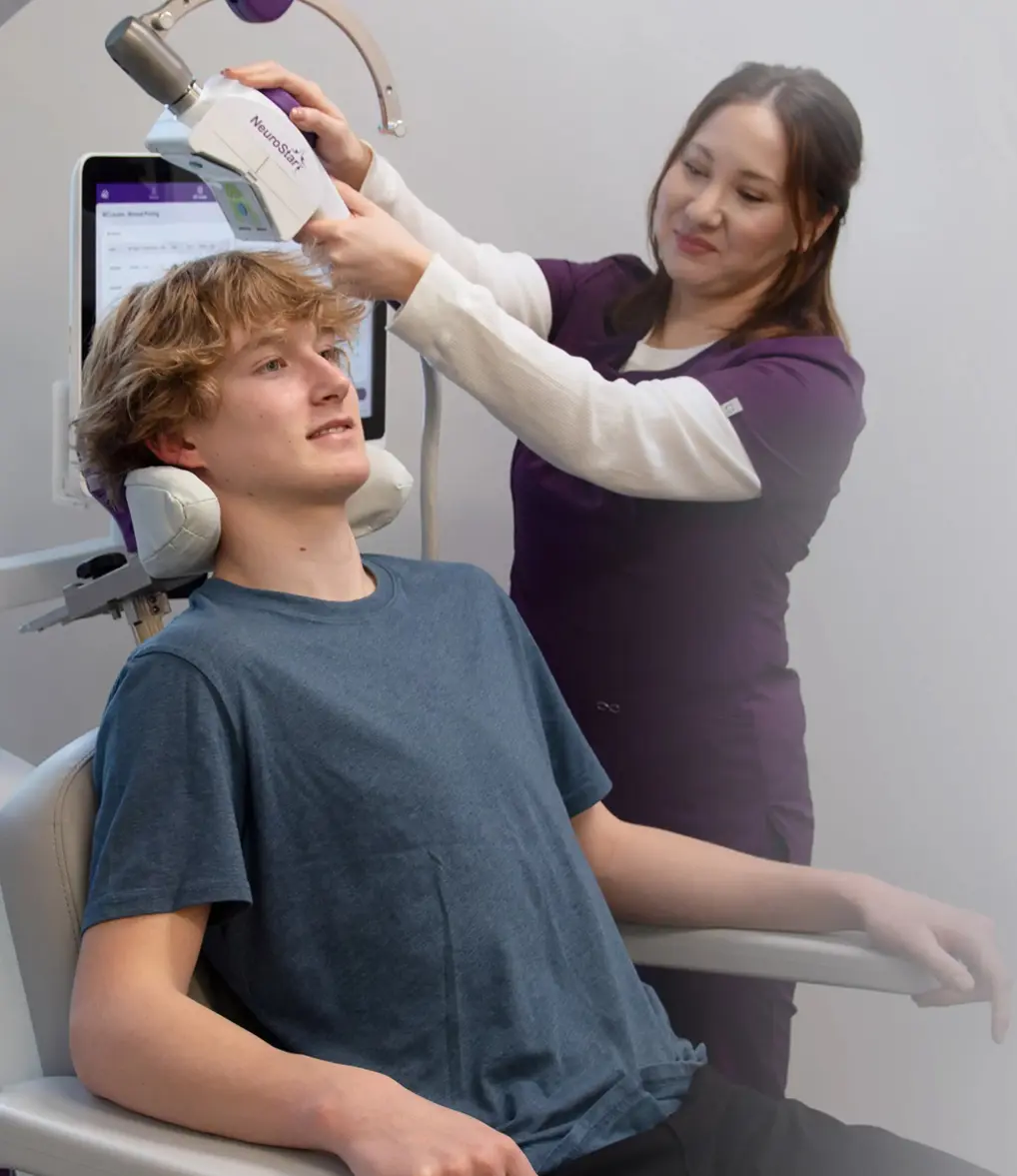
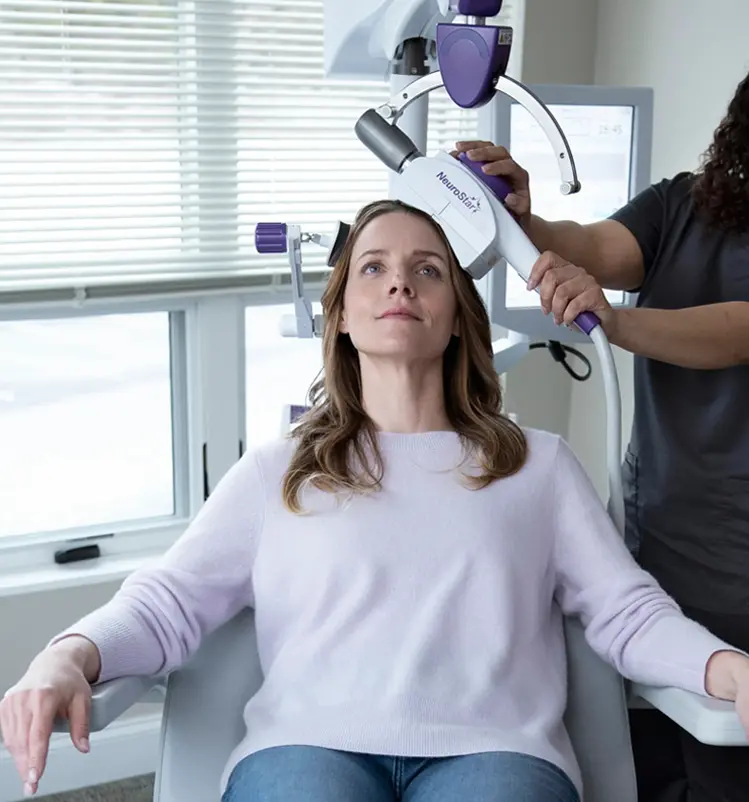
You will lie back and relax in the chair. The machine makes a clicking sound, similar to an MRI machine. We can give you ear plugs to help reduce the noise. We will then give you some earplugs to wear as the rTMS machine makes a loud clicking noise. It is about as loud as an MRI scan. Then you will be able to lie back and relax in our comfy chair.
Then we move the machine to stimulate the dorsolateral prefrontal cortex – the part of your brain that controls your moods. This is the part we will focus on during all of your TMS therapy sessions with a TMS therapist near me.
Are There Any Reasons Why I Might Not Be Able to Have TMS?
If you have metal braces or metal dental fillings you can have TMS. But you can’t have TMS if you have:
- Tattoos on your scalp or face that have been done with metallic ink
- Aneurysm clips or coils
- Bullet fragments in your neck or head
- Neck or brain stents
- Deep brain stimulators
- Electrodes.
Do I Qualify?
More TMS Testimonials
Are There Any Side Effects?
Any Questions?
Contact us using this special contact page to ask any questions regarding TMS.
Frequently Asked Questions
What is Transcranial Magnetic Stimulation?
How does TMS Therapy work?
How long is TMS treatment?
Is TMS Therapy covered by my insurance?
Is TMS Therapy a good alternative for patients who cannot tolerate the side effects of antidepressant medications?
Is TMS Therapy like other alternative therapies that use magnets to treat some illnesses?
The intensity of the magnetic field is similar to that of an MRI. These techniques differ radically from the popular use of low intensity, static magnetic fields. Those products deliver weak and undirected static fields that are not capable of activating brain cells. The activation and stimulation of brain cells is a key part of why TMS is so effective.
Does it hurt?
Insurances We Accept…


(888) 870-1775
(847) 349-1619
2500 West Higgins Road, Suite 105, Hoffman Estates, Illinois 60169-7220
Get In Touch…
Ardent provides counselors near me in IL, IA, NE and IA. If you have insurance, most of the cost of your session may be covered by your insurance. If you don’t have insurance, we provide a sliding scale of fees depending on which therapist you see and your financial situation. We provide face to face counseling if you live in Chicagoland and counseling anywhere via online counseling.
Please note all information submitted via this contact form is kept confidential. However, please note that this is not a secure email transmission.
In accordance with The Health Insurance Portability and Accountability Act of 1996 (HIPAA) and the Health Information Technology for Economic and Clinical Health Act (HITECH Act), “Personal Health Information” may not be included in this transmission. Thank you for your cooperation.